
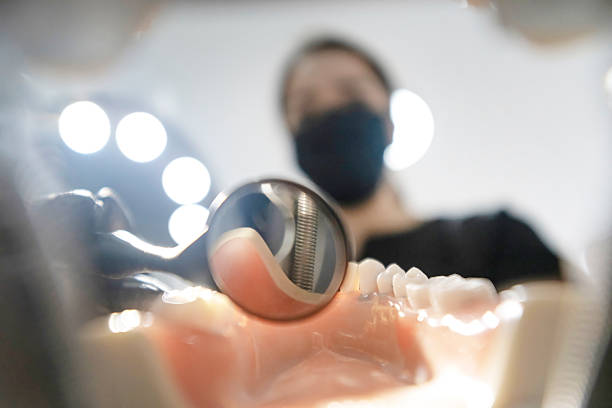
In many cases, yes. Osteoporosis does not automatically rule out dental implant treatment. Dental implants with osteoporosis are often possible after a careful evaluation. Candidacy depends on the jawbone at the planned implant site, your medical history, your medications, and your oral health. If you are exploring dental implants in Tuscaloosa after an osteoporosis or low bone density diagnosis, this guide explains what it means for you.
Osteoporosis is a systemic condition. It affects bone strength and structure throughout the skeleton. Still, that does not mean your jaw cannot support an implant. Your jaw needs its own evaluation. An implant dentist in Tuscaloosa, AL, looks at local factors, starting with jawbone density at the site and the volume of bone available. Your dentist also considers how stable the implant will be at placement. Finally, they look at how well the bone is likely to bond with the implant during healing. This process is called osseointegration.
Medications matter too. Some drugs used to manage osteoporosis can influence dental treatment planning. Below, we walk through osteoporosis and dental implants step by step. First, you will see how the condition affects bone and the jaw. Next, we explain how an implant assessment works and what role medications play. We then cover when grafting comes up, how healing works, and how treatment is planned around you.
Does Osteoporosis Automatically Rule Out Dental Implants?
No. Osteoporosis is one factor in a larger clinical evaluation, not an automatic exclusion. A systemic diagnosis tells your dentist about your overall bone health. It does not answer a more specific question: can this particular site support an implant? Only a dental exam and imaging of that site can answer it.
Why Osteoporosis Does Not Automatically Mean You Cannot Get an Implant
A diagnosis alone cannot determine dental implant candidacy. When an implant dentist in Tuscaloosa plans implant treatment, they weigh several factors together. These include your oral health, the bone at the implant site, your medical history, and your current medications. Your dentist also considers smoking, gum health, how well you typically heal, and where the missing tooth is located.
Two patients with the same diagnosis can have very different plans. One may have healthy gums and solid bones at the site. Another may need gum treatment or a bone graft first. That is why dental implants with osteoporosis are planned case by case. Your plan is built around your overall health and your mouth, not your diagnosis alone.
Systemic Bone Density and Jawbone Density Are Not Exactly the Same Thing
Osteoporosis is usually diagnosed with a bone density scan of the hip or spine. That scan measures systemic bone mineral density. It does not directly describe your alveolar bone, the ridge of jawbone that holds your teeth and would hold an implant.
At the implant site, your dentist looks at local bone quality, meaning how dense and firm the bone is. They also check local bone volume, or how much bone is there. These details shape bone density needs for dental implants at each site. Our guide on how jawbone density affects dental implant planning covers them in depth. For patients with osteoporosis, the implant site assessment, not the hip or spine scan, guides the plan.
How Osteoporosis Affects Bone Throughout the Body
Understanding the condition itself helps explain why your dentist evaluates the jaw separately.
What Happens to Bone With Osteoporosis?
Bone is living tissue. Your body constantly breaks down old bone and builds new bone in a cycle called bone remodeling. In osteoporosis, breakdown outpaces rebuilding. Over time, bone mineral density drops and bones lose strength, which raises the risk of fractures.
For dental care, the takeaway is this: osteoporosis reflects your overall skeletal health. It does not show how much bone exists, or how dense it is, at one spot in your mouth.
Does Osteoporosis Affect the Jawbone?
The jaw is bone, so osteoporosis can affect it. However, the condition does not change every part of the skeleton in the same way. The jawbone has its own structure and blood supply, and it responds to daily chewing forces.
Some patients with osteoporosis have good jawbone density at their implant site. Others have thinner or softer bones there. Your diagnosis alone cannot show which applies to you. Implants need precise measurements at the exact site, so overall bone health is only part of the picture. A dental exam and imaging show whether the jawbone meets the bone requirements for an implant.
Osteoporosis vs. Local Bone Loss After a Tooth Is Missing
These are two different processes. Osteoporosis is a systemic skeletal condition. Local bone loss often follows tooth loss. Tooth roots stimulate the surrounding bone each time you chew. Once a tooth is gone, that area loses stimulation. The alveolar ridge then gradually remodels and shrinks, a process called resorption.
A patient can have either condition or both. Someone without osteoporosis may still have a thin ridge after years with a missing tooth. Someone with osteoporosis may have plenty of bone where a tooth was recently removed.
What Bone Conditions Are Needed for a Dental Implant?
An implant needs enough healthy bone around it to stay stable while it heals and later during chewing. No single density number qualifies or disqualifies a patient. Instead, dentists evaluate two local features: bone volume and bone quality.
Bone Volume: Is There Enough Height and Width?
Bone volume describes the size and shape of the ridge. Height is how tall the bone is. Width is how thick it is from the cheek side to the tongue side. The surrounding bone holds an implant firmly and helps it handle chewing forces. If jawbone volume is too narrow or too short, the implant may not be fully supported. Ridge shape also matters for implant placement, since some ridges become uneven after an extraction.
Bone Quality: How Well Can the Implant Be Supported?
Bone quality describes the inner structure of the ridge, from dense and compact to soft and porous. Denser bone tends to grip an implant more tightly during dental implant placement. Dentists call this initial grip primary stability, and it is the starting point for long-term implant stability. Softer bone can still support an implant, but your dentist may adjust the technique or timing. A ridge can be wide but soft, or narrow but dense.
Why Bone Volume and Bone Density Should Not Be Used Interchangeably
They describe different things. Bone volume is how much bone exists. Bone density, or quality, describes what that bone is like inside, such as how compact or porous it is. Osteoporosis is a systemic condition affecting overall skeletal health. Mixing these terms can lead to wrong assumptions. Examples include believing osteoporosis always means too little bone, or that it always requires a graft.
Here is how the three compare:
| Term | What It Describes | How It Is Evaluated |
|---|---|---|
| Bone Volume | Height, width, and shape of the ridge at the implant site | Dental exam and imaging of the site |
| Bone Density (Quality) | How compact or porous the bone is at the site | Imaging and how the bone responds during placement |
| Osteoporosis | A systemic condition affecting bone strength across the skeleton | Medical diagnosis, often with a bone density scan |
How an Implant Dentist Evaluates Patients With Osteoporosis
An implant evaluation looks at your whole health picture, then narrows to the exact site. At Riverview Dental Designs in Tuscaloosa, this happens during your implant consultation, before any treatment decisions. Here is what that process typically includes.
Reviewing Your Medical and Osteoporosis History
Your dentist will ask when you were diagnosed and how your condition is managed. They may ask about past fractures, other medical conditions, and previous surgeries. How you healed after past procedures is helpful to know too. When needed, your dentist may coordinate with your physician. This review guides planning. It never means you should change your medical care on your own.
Reviewing Medications Before Dental Implant Treatment
Bring a complete list of every medication you take, including past osteoporosis medications. Note how you take each one and how long you have used it. Many patients take antiresorptive medications, such as bisphosphonates, which slow bone breakdown. Others take bone-building or hormone-related therapies. Taking any of these does not automatically prevent implant placement.
Your dentist reviews this list alongside your medical history for safe implant planning. When necessary, your dentist coordinates with your prescribing healthcare professional. Any change to your medication stays that professional’s decision. We explain why these details matter in the medications section below.
Examining Your Gums and Remaining Teeth
Healthy gums support healthy implants. Your dentist checks your periodontal health for active gum disease, plaque buildup, and inflammation. Infection near an implant site can affect healing and long-term stability. If gum disease is present, it usually needs treatment before implant surgery. Your remaining teeth are checked too, since decay or other problems can change the plan. Your daily hygiene routine also matters, because implants need consistent care to stay healthy.
Evaluating the Jawbone at the Planned Implant Site
The exact location of the missing tooth shapes the plan, because every site has different space and anatomy. Your dentist measures the ridge, checks bone availability, and looks at the neighboring teeth and their roots. In the upper back jaw, the sinus may sit close to the implant area. In the lower back jaw, a nerve runs through the bone. Your plan must account for these structures. When clinically appropriate, 3D imaging can show them more clearly.
Why Osteoporosis Medications Matter in Dental Implant Planning
Medications are one of the most important parts of planning for patients with osteoporosis. Here is why your dentist asks so many questions about them.
Why Your Dentist Needs to Know Every Medication You Take
Before any surgical dental procedure, your dentist reviews your full medication history. This step is called medication reconciliation. It means comparing your list with your health records to confirm nothing is missing. Some medications affect bleeding, healing, or bone. Others interact with anesthesia or sedation. Include prescriptions, over-the-counter drugs, and supplements. Mention past osteoporosis treatments too. Some bone medications can stay active in the body long after the last dose.
What Are Antiresorptive Medications?
Antiresorptive medications slow the body’s natural bone breakdown. By reducing breakdown, they help preserve bone density and lower fracture risk. Bisphosphonates are the most familiar group. Denosumab is another antiresorptive drug used for osteoporosis. Your physician chooses these medications based on your health needs. Your dentist’s role is to plan dental care around them.
Do Bisphosphonates Automatically Prevent Dental Implant Treatment?
Not necessarily. Many patients taking bisphosphonates for osteoporosis may still be candidates after a careful evaluation. When reviewing bisphosphonates and dental implants, your dentist considers the specific drug and whether you take it by mouth or by infusion. How long you have used it matters too, along with your other health factors.
Dentists review these drugs because of a rare complication called medication-related osteonecrosis of the jaw (MRONJ). It involves a jawbone that does not heal properly after certain procedures. The American Dental Association’s guidance on osteoporosis medications describes this risk as low for osteoporosis patients. The ADA also notes that good oral hygiene and regular dental care may help lower it.
Why Patients Should Never Stop Osteoporosis Medication on Their Own
Do not stop or change your osteoporosis medication based on online information, including this article. These medications help protect you from fractures. The ADA notes that for osteoporosis patients, the benefits of these medications outweigh the low risk of jaw complications. Medication decisions belong between you, your prescribing physician, and your dental provider. If you are considering implants, let both your physician and your dentist know so they can coordinate your care.
Can Dental Implants Integrate With Bone in Patients With Osteoporosis?
In many cases, yes. Integration depends on local bone conditions, stability at placement, and healing, not on the diagnosis alone.
What Is Osseointegration?
Osseointegration is the biological process through which bone forms a stable connection with the dental implant surface. This bond turns the implant’s initial grip into long-term implant stability. During dental implant healing, new bone gradually grows tightly against the implant over several months. Once integrated, the implant can support a replacement tooth and handle chewing forces. Strong initial stability gives this process the best start.
Does Lower Bone Density Affect Initial Implant Stability?
It can. An implant has threads that lock into the surrounding bone at placement. Denser bone gives those threads more to hold onto. Softer bone may grip the implant less firmly at first. That does not mean the implant will fail. Your dentist measures stability during placement and uses that reading to decide the safest next steps for your case.
Can Healing Timelines Be Adjusted?
Yes. Treatment timing can be personalized. If stability at placement is lower, your dentist may allow more healing time before attaching the final tooth. Site conditions and how your body heals also shape the schedule. No one can promise an exact timeline in advance. For the typical stages, see our overview of dental implant healing and osseointegration.
Would Someone With Osteoporosis Need a Bone Graft Before Dental Implants?
Not necessarily. Bone grafting addresses local problems with bone volume or ridge shape. Osteoporosis by itself does not mean you need a graft.
When Bone Grafting May Be Recommended
A graft may help when the ridge is too narrow or too short to surround an implant. It can also restore bone that shrank after an extraction or repair a defect at the site. In the upper back jaw, a sinus lift may add height. For many patients, grafting is what makes implant treatment possible. Our article on bone grafting before dental implants explains how the process works.
Osteoporosis vs. Insufficient Jawbone Volume
Many people assume that osteoporosis means they will need a bone graft. That is not accurate. Osteoporosis affects bone strength across the skeleton. Insufficient jawbone volume means the ridge at one site is too small to hold an implant. Your dentist decides on grafting by examining and imaging that site, not by looking at your diagnosis. Osteoporosis may still shape other parts of your plan, such as healing time or medication review.
How Previous Tooth Loss Can Affect Available Bone
As explained earlier, the ridge begins to resorb once a tooth is gone. Much of that change tends to happen in the first months after an extraction. Ridge width often shrinks more than height. The longer a tooth stays missing, the more likely a graft becomes before an implant can be placed. If you are deciding when to replace a tooth, timing can affect your options.
Other Factors That Can Affect Implant Success Alongside Osteoporosis
Osteoporosis is rarely the only factor in a treatment plan. Other conditions and habits can influence healing and long-term results. Our guide to factors that can contribute to dental implant failure covers these in more depth. Here is how each relates to patients with osteoporosis.
Smoking and Nicotine Use
Smoking reduces blood flow to the gums and bone. That can slow healing and weaken the bond between bone and implant. For patients with lower bone density, nicotine adds another healing challenge. Your dentist may talk with you about reducing or stopping nicotine around your surgery.
Diabetes and Blood Sugar Management
Diabetes can affect how the body heals and fights infection. Well-managed blood sugar generally supports better healing after oral surgery. When diabetes and osteoporosis occur together, your dentist considers both in your healing plan. Your dentist may ask about your recent levels and coordinate with your physician when helpful. Managing diabetes itself stays with your medical team.
Gum Disease and Oral Hygiene
Periodontal health affects implant health. The gums and bone around an implant are called peri-implant tissues. Plaque can inflame these bone tissues, much like gum disease around natural teeth. Over time, that inflammation can affect the bone supporting the implant. Patients with a history of gum disease may need closer follow-up. When bone density is already lower, protecting that supporting bone matters even more. Daily brushing, flossing, and regular dental visits help protect your implant long term.
Teeth Grinding and Bite Forces
Grinding and clenching place heavy, repeated force on teeth and implants. This is a mechanical issue, separate from bone health. Still, excess force on an implant in softer bone adds stress. If you grind your teeth, your dentist may recommend a night guard after treatment.
The Location of the Implant
Different areas of the mouth bring different considerations. Front teeth call for more focus on appearance and gum contour. Back teeth handle stronger chewing forces. The upper jaw often has softer bones than the lower jaw, and the upper back sits near the sinus. Your dentist weighs these differences alongside your overall bone health when planning your implant.
Are Dental Implants an Option for Older Adults With Osteoporosis?
Yes, they can be. Both tooth loss and osteoporosis become more common with age, so many patients asking about implants are older adults. Age and diagnosis are both part of the picture, but neither decides the outcome alone.
Age Alone Is Not the Main Qualification
There is no set upper age limit for dental implants. A healthy 75-year-old may be a stronger candidate than a younger patient with unmanaged health conditions. Age is one detail, but it does not decide candidacy by itself. The same is true for an osteoporosis diagnosis. Your dentist looks at how both fit into your full health picture.
Overall Health May Matter More Than Age
Your overall health carries more weight. Your dentist reviews your medical history, current medications, and healing factors. For patients with osteoporosis, that includes any bone medications you take or have taken. Oral health and bone at the site also count. Another key question is whether you can keep up with daily cleaning and regular checkups. Implants need ongoing care, so your plan should fit what you can comfortably maintain.
Why Older Patients Need Individualized Implant Planning
Older patients often have more medical history to consider, so a one-size-fits-all approach does not work. Good planning starts with what your evaluation actually finds, not with assumptions about age. Those findings may point to extra healing time, a graft, or coordination with your physician. Each choice depends on your health and your implant site.
Questions to Ask at a Dental Implant Consultation in Tuscaloosa
A dental implant consultation in Tuscaloosa is your chance to learn how osteoporosis affects your specific case. If you are exploring dental implants in Tuscaloosa, AL, bring your medication list and any recent bone density results. These questions can help guide the conversation:
- Is there enough bone at my missing-tooth site?
- How does my osteoporosis affect my implant plan?
- Does my medication history change the treatment approach?
- Would I need bone grafting?
- How will you evaluate my jawbone?
- Could my healing timeline be different from the typical one?
- What other health factors should we consider?
- What maintenance will I need after treatment?
An implant dentist in Tuscaloosa, AL, should answer these clearly and without pressure. You should leave knowing your options and the reasons behind each recommendation.
Frequently Asked Questions About Osteoporosis and Dental Implants
Can you get dental implants if you have osteoporosis?
Often, yes. Osteoporosis does not automatically rule out dental implants. Your dentist evaluates the bone at the implant site, your medical history, your medications, and your oral health. Many patients with osteoporosis move forward with implants after a careful, personalized assessment.
Does low bone density cause dental implants to fail?
Not automatically. Low bone density is a planning factor, not a prediction of failure. Softer bone may offer less initial stability, so your dentist may adjust the technique or allow more healing time. Smoking, gum health, and bite forces also affect long-term results.
Can you get dental implants while taking osteoporosis medication?
In many cases, yes. Your dentist reviews every medication you take as part of your health history. That review helps shape a safe, personalized plan. When needed, your dentist coordinates with your physician. Keep taking your medication as prescribed unless your physician advises otherwise.
Can you get dental implants while taking bisphosphonates?
Possibly. Bisphosphonates do not automatically prevent implant treatment. Your dentist considers the specific drug, whether it is oral or given by infusion, and the length of use. These drugs are linked to a rare jaw complication, so careful evaluation matters. Your dentist may coordinate with your prescribing physician.
Does osteoporosis mean I will need a bone graft?
No, not by itself. Grafting depends on bone volume at the implant site, not systemic bone density. If the ridge is too thin or too short, a graft may help. If enough bone is present, you may not need one, even with osteoporosis.
How does a dentist check whether my jawbone can support an implant?
Your dentist starts with an oral exam and a health history review. Imaging shows the height, width, and shape of the ridge. When clinically appropriate, 3D imaging can reveal nearby structures like the sinus or nerve. Bone quality is also assessed during placement.
Does osteoporosis make dental implants take longer to heal?
It may, but not always. Healing varies from person to person. If initial stability is lower, your dentist may extend the healing period before placing the final tooth. Your plan adapts to how your bone responds rather than following a fixed schedule.
Are dental implants safe for seniors with osteoporosis?
For many seniors, implants can be a safe option after a proper evaluation. Age alone does not exclude anyone. Your dentist reviews your overall health, medications, oral hygiene, and the bone at the site. That personalized assessment shows whether implants fit your needs.
Find Out Whether Dental Implants Are Right for You in Tuscaloosa, AL
Osteoporosis raises fair questions about tooth replacement, but it does not have to close the door. At Riverview Dental Designs, our father-and-son team reviews your health, medications, and jawbone before recommending anything. We explain your options clearly, so you can decide with confidence. Sedation options are also available for patients who feel nervous.
If you are considering dental implants in Tuscaloosa or Northport and have concerns about your bone health, we are here to help. Schedule an implant consultation for a personalized evaluation and a plan that fits your health, goals, and comfort.